
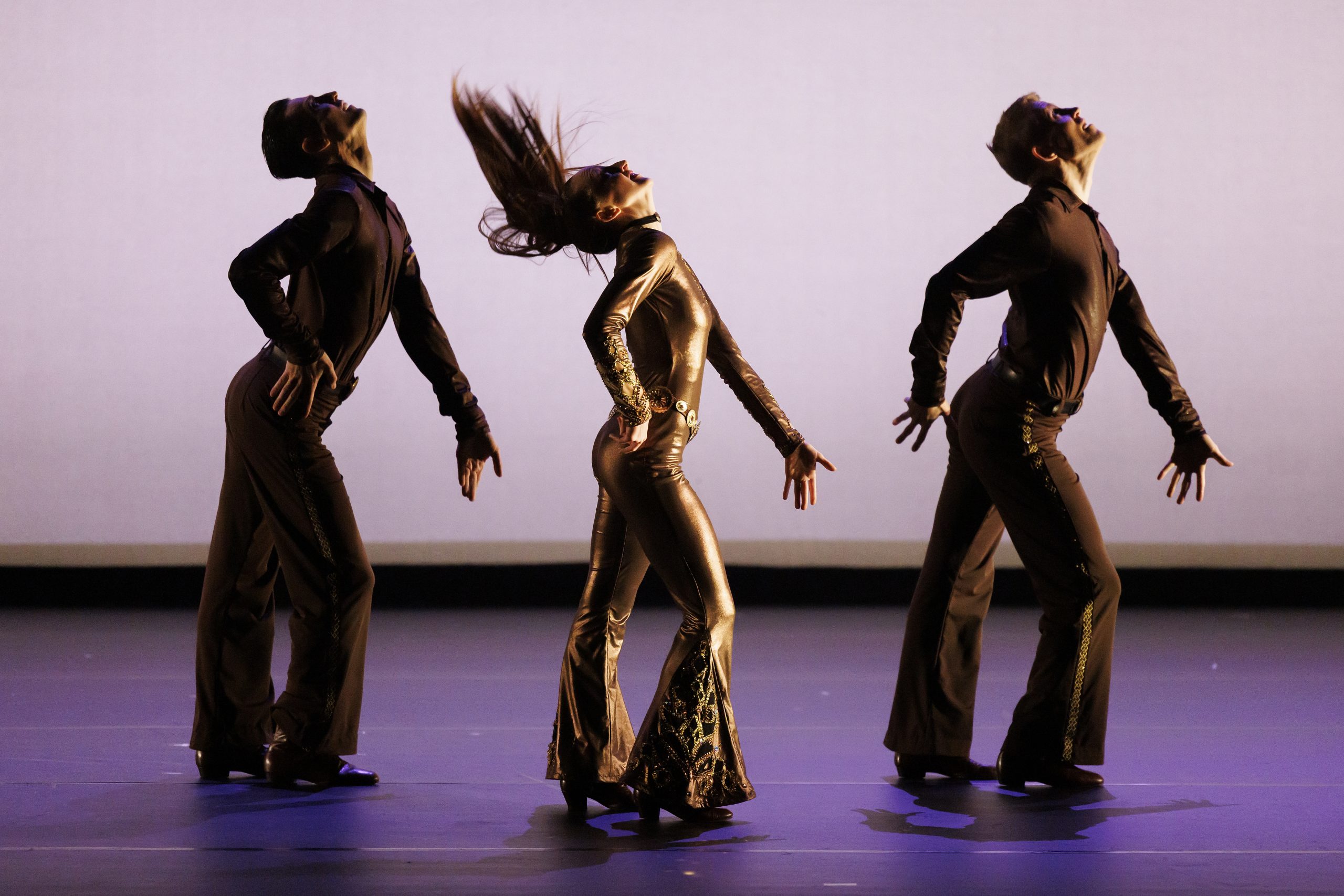
Hubbard Street Dance Chicago
Photo by Bruce Zinger
Dance Review – Fall for Dance North 2026: Legends: Signature Programme 1 (closed Oct. 18) and Heartbeats: Signature Programme 2 (closed Oct. 18), Bluma Appel Theatre.
Last year marked the first festival under the joint leadership of festival director Lily Sutherland and artistic director Robert Binet, giving us an inkling of where they wanted to take Fall for Dance North. The 2026 edition represents the full flowering of their vision.
Gone are the days when the major programs filled the cavernous Meridian Hall and Ryerson Theatre. The festival has been scaled back to the more intimate Bluma Appel Theatre, with other performances at the Jane Mallett and Betty Oliphant Theatres, and along the Front Street corridor. The result is a more cohesive festival, both geographically and artistically.
Equally important, despite a modest increase in ticket prices, the standard seat is an affordable $30, regardless of where one sits. It is a policy that makes dance accessible and helps attract a younger demographic.
What is particularly striking about the 2026 festival is the ambition of its programming. Sutherland oversees the administrative side, while Binet, along with co-curators, shapes the artistic vision and judging by the first two signature programs, Legends and Heartbeats, the results are impressive.
The first thing one notices is that these are not cookie-cutter programs. In earlier years, Fall for Dance North offered an exciting potpourri of dance, with a succession of disparate works. Binet has moved towards thematic programming, giving each evening a distinctive identity. Legends featured six works celebrating legendary performers, choreographers and/or companies, while Heartbeats presented three longer pieces exploring the many directions in which street dance has evolved.
The contrast could hardly have been more pronounced. Legends was designed to delight, a feast for the eye filled with virtuosity, theatricality and sheer entertainment. Heartbeats, on the other hand, brought greater gravitas, examining the emotional and social dimensions of dance that has emerged from hip-hop and street culture.
What united them was the intelligence of the programming, particularly the way each evening flowed from beginning to end.
Legends opened with Hubbard Street Dance Chicago performing Sweet Gwen Suite, a deliciously sassy, and amusing work from the 1960s choreographed by Bob Fosse and Gwen Verdon. How wonderful to have Hubbard Street back, and what a perfect way to launch the festival. The trio of dancers captured that unmistakable Fosse-Verdon combination of wit, sensuality and stylized movement, immediately putting the audience in a celebratory mood.
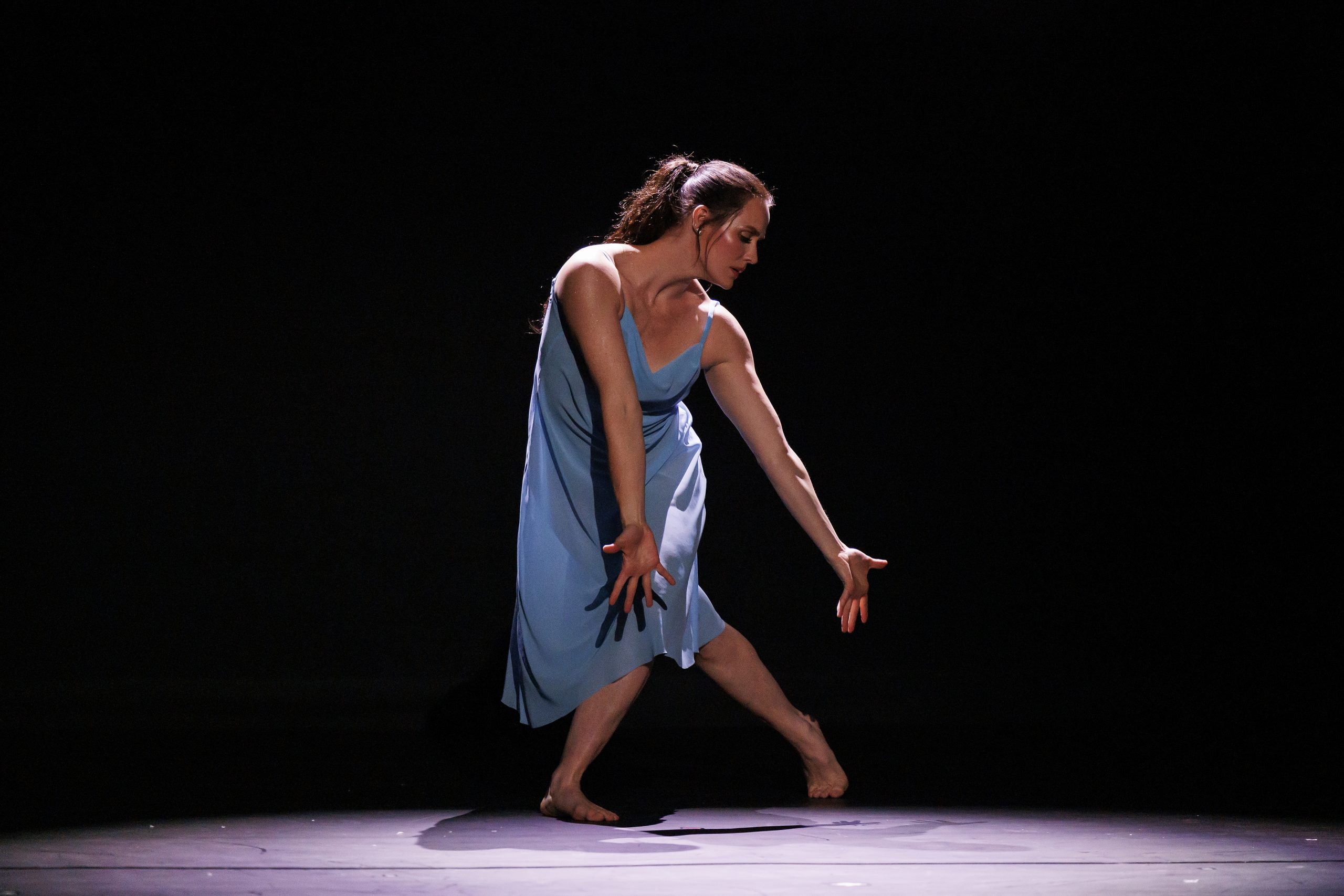
Tessa Virtue
Photo by Bruce Zinger
At the other end of the evening was the performance everyone was waiting for. What would Olympic ice-dancing legend Tessa Virtue look like off the ice?
The answer came in The Unruly Heart, choreographed by Alyssa Martin, this year’s FFDN’S artist-in-residence and co-curator with Binet of Legends. Talk about choosing the perfect music. From the crashing opening of Céline Dion’s gloriously overwrought “It’s All Coming Back to Me Now”, Martin created a work of unrelenting drama that seemed to respond to every lyric in the song.
I have always maintained that Martin has a fevered brain, and this piece only confirms it. Virtue was virtually never still. Martin sent her hurtling across the stage as though she were still skating, her entire body responding to the emotional excesses of the music. Every bone and muscle seemed to be engaged as she threw herself into the choreography with astonishing athleticism.
It was a tour de force, and one wondered whether an ordinary dancer could have sustained such relentless physical demands. Virtue’s athletic background was unmistakable, but so was her commitment to the theatricality of the piece. The audience went wild.
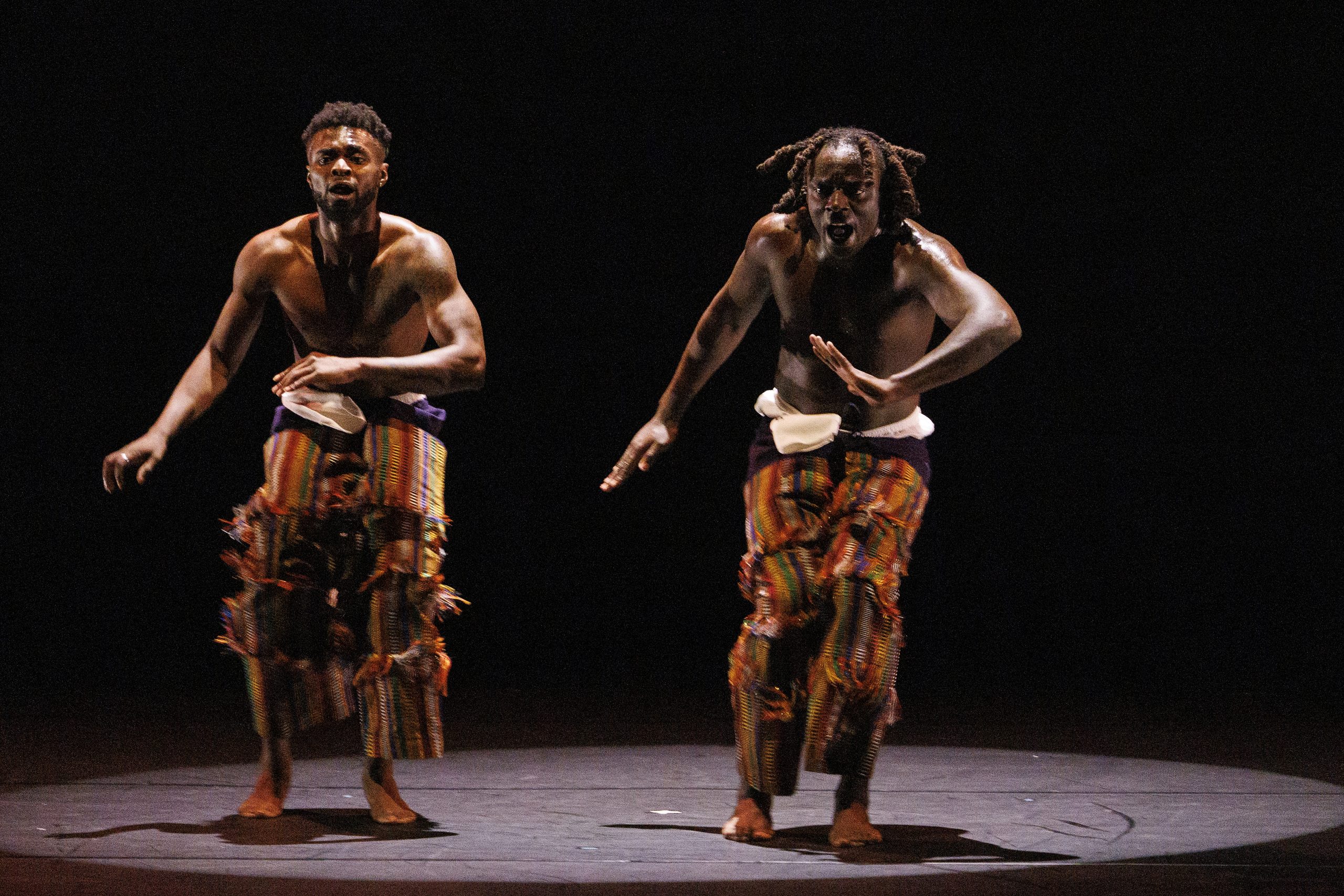
Kwasi Obeng-Adiei and Ambrose Tjark
Photo by Bruce Zinger
Interestingly, Heartbeats also began with a work that immediately commanded attention, although in an entirely different manner. Echoes of the Same Tree, by Toronto’s Kwasi Obeng-Adjei and Nigerian choreographer Ambrose Tjark, was a welcome return from the 2025 festival.
One of Binet’s strengths as artistic director is his willingness to bring in knowledgeable collaborators when programming dance forms outside his own particular expertise. Obeng-Adjei, who was born in Brampton, helped shape Heartbeats, drawing on his understanding of the international street-dance scene.
Equally commendable is Binet’s willingness to repeat a successful work. There is no reason why everything must be absolutely new, particularly when the festival is introducing audiences to so much unfamiliar material.
Echoes of the Same Tree began with a film of Tjark in Lagos discussing twin spirits. Suddenly, two men appeared onstage, almost identical in height and costume, their movements suggesting a shared identity. Their extraordinarily intricate footwork drew heavily on West African dance traditions while incorporating elements of street dance.
The choreography was both agile and mesmerizing, but the most arresting moment came when one dancer suddenly released a heartfelt cry from somewhere deep within himself. It was as though he were struggling to break free from their shared identity and establish an individuality of his own.
His partner gradually drew him back into their physical relationship, although the final image suggested that the struggle was far from resolved. It was a beautiful and unsettling work, its emotional shock made all the more powerful by the intricacy of the movement.
If Legends generally celebrated the pleasures of dance, Heartbeats was more concerned with what dance could reveal about the human condition. Yet the most powerful works across both programs came, interestingly enough, from France.
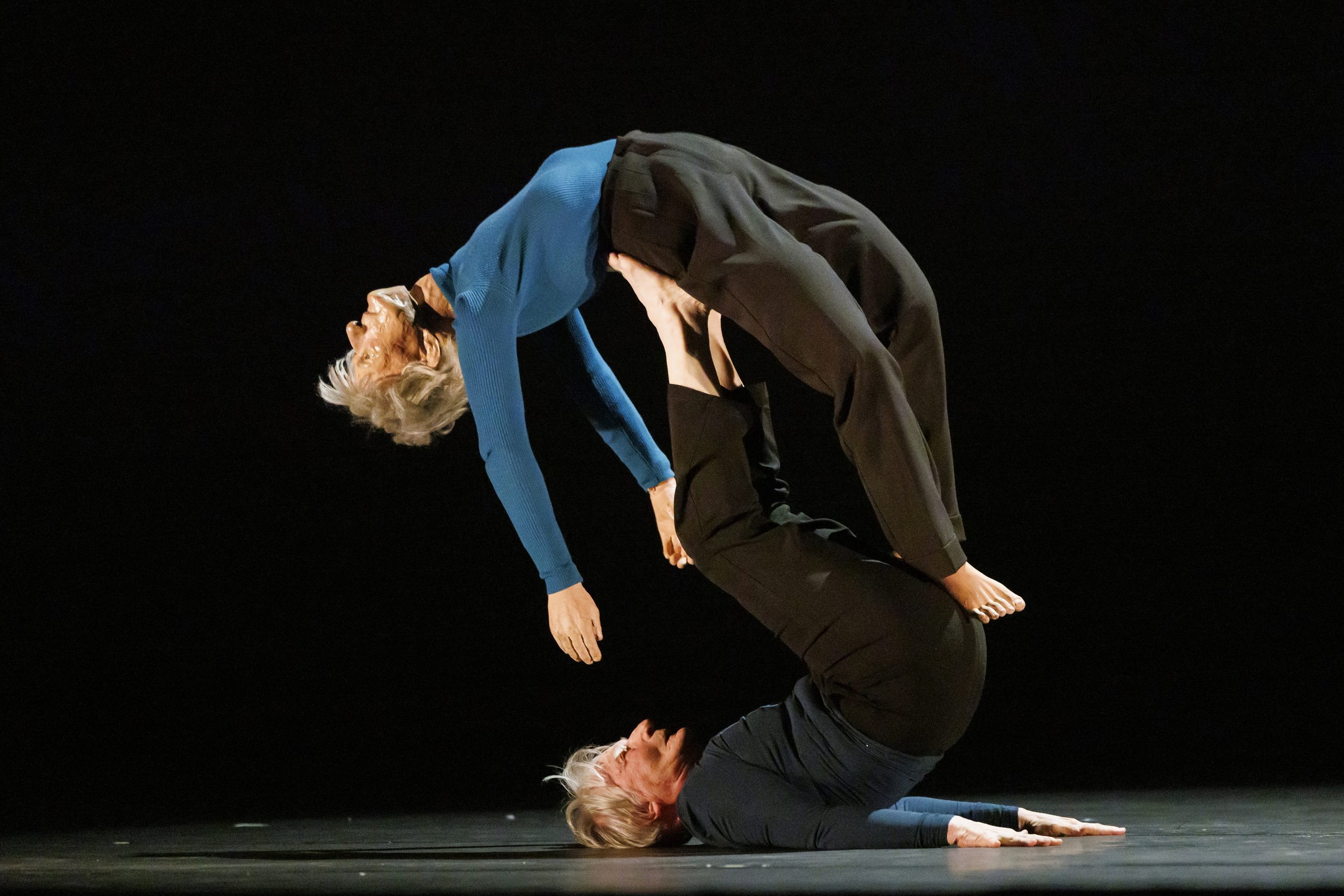
Claire Heggen
Photo by Bruce Zinger
In Legends, Claire Heggen, a doyenne of French contemporary dance and puppetry who founded Théâtre du Mouvement in 1975, presented Ma P’tite Dame. It was the one work in the program that truly challenged the imagination.
At first, there appeared to be two people onstage, one lying motionless as though dead. Only when Heggen picked up the figure and began manipulating it did we realize that the second person was actually a puppet, made to look remarkably like the performer herself.
What followed was a startling confrontation between a woman and what seemed to be her own double. Heggen hurled and whirled the puppet with a vengeance that suggested anger, frustration and perhaps a profound resentment of aging. It was almost as though she were fighting her own self, or attempting to exorcise the inevitable passage of time.
The dark lighting and a succession of classical musical selections, especially Arvo Pärt, intensified the atmosphere. There was something genuinely shocking about the violence of the movement, and the image of Heggen battling this likeness of herself was impossible to forget.
The French contribution to Heartbeats was equally powerful, although its concerns were social rather than personal.
Compagnie KH
Photo by Bruce Zinger
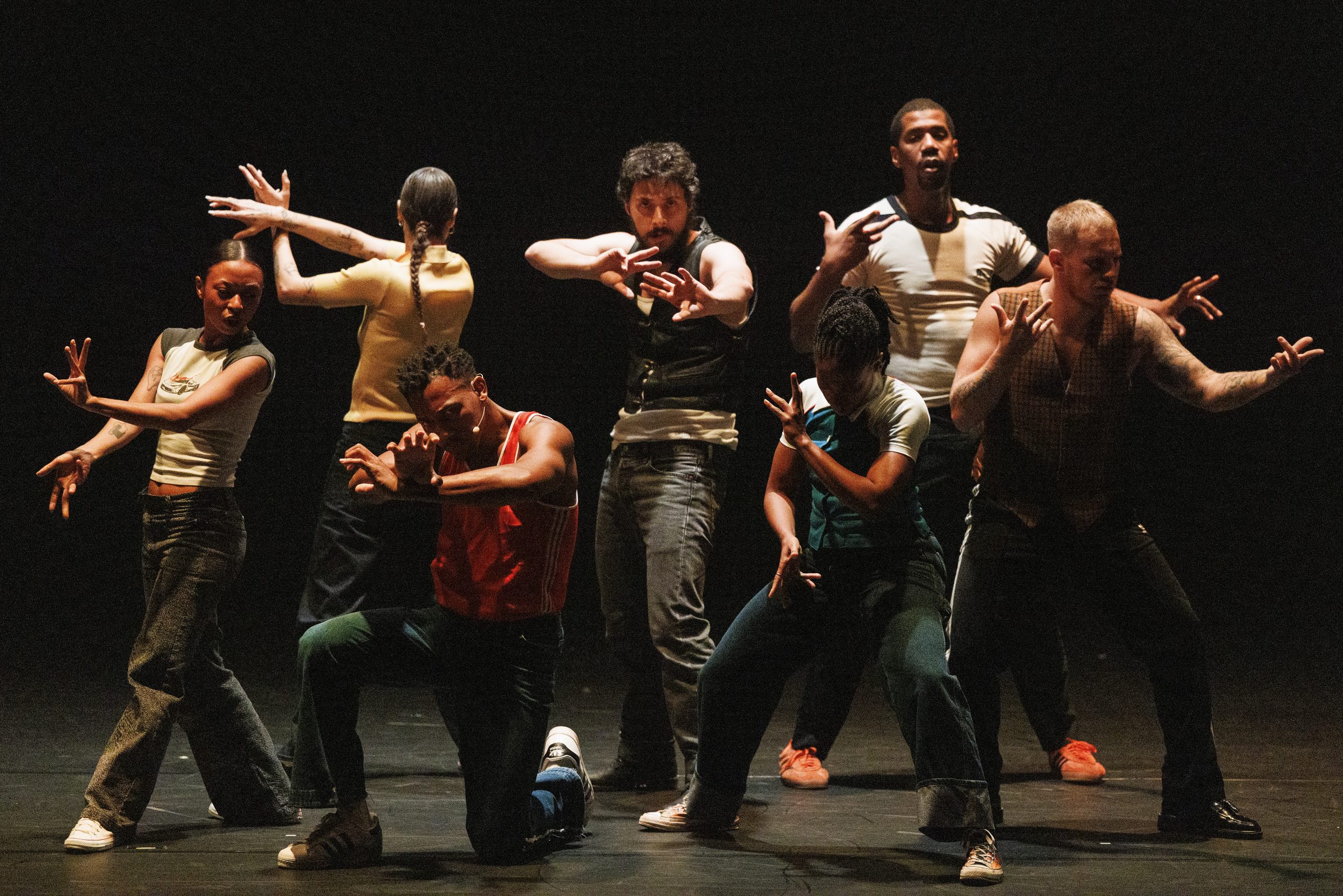
Compagnie KH’s Roses, choreographed by Karim KH, which closed the program, was a work of cinematic storytelling involving a jewellery store heist of an elixir that offered escape into dreams, and an escape from the harsh realities of life on the streets. Drugs, robberies and encounters with the police were set against the yearning for something better.
The choreography was extraordinary in its expression of angst, oppression and hurt. The seven dancers seemed to embody the frustrations of people trapped by their circumstances, while the varied musical score, at times almost angelic, offered a poignant contrast to the harshness of their world.
Spoken dialogue, supported by surtitles, added another dimension to the storytelling. The result was a deeply felt work that transcended its street-dance origins to become a powerful statement about contemporary society.
One could hardly watch Roses (and its ironic title not withstanding) without thinking about the social tensions and unrest in France itself. The performers were here in Toronto, but the world they portrayed seemed very much connected to the troubled realities of their own country. France was literally on fire.
What linked Ma P’tite Dame and Roses was their emotional ferocity. One was an intensely personal struggle against aging and identity; the other a collective cry against social circumstances. Both used movement to express feelings that words alone could scarcely convey, and for me they were the most compelling works of the two evenings.
Elsewhere in Legends, the emphasis was decidedly more celebratory.
Sampradaya Dance Creations
Photo by Bruce Zinger
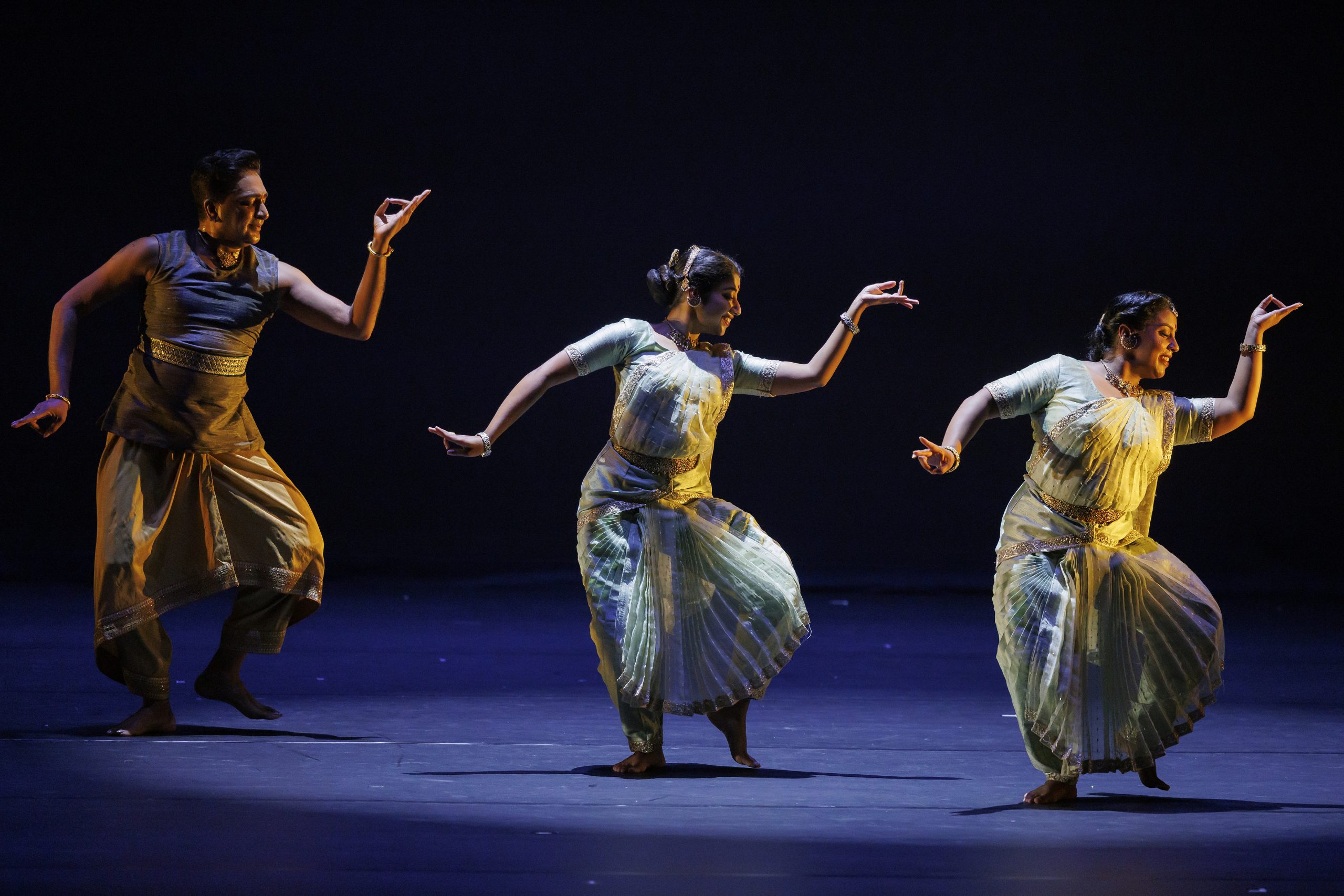
Toronto’s Sampradaya Dance Creations demonstrated once again how successfully the company has expanded the possibilities of Bharatanatyam. Their presentation, a FFDN commission, included Rooted, choreographed by Atri Nundy, and performed by teenage students from its academy, followed by Rising, choreographed by Suma Suresh, featuring the professional company that enlarged and magnified the vocabulary of the former, was collectively called Parampara.
In both cases, traditional Indian classical dance was stretched towards an almost balletic vocabulary. Even the music reflected this evolution, taking familiar Bharatanatyam foundations and expanding them into fuller, more contemporary compositions. It was a prime example of the experimental artistic direction that founder Lata Pada has taken the company, and the results were visually splendid.
The National Ballet of Canada offered a different kind of beauty with Distorted Familiarity, a work by Katlyn Addison, who was born in Brampton and trained at Canada’s National Ballet School.
Originally created for a National Ballet gala, the duet explores a love that transcends time and place. With a grand piano and violin providing the musical accompaniment, the choreography unfolded in a pas de deux that was unabashedly romantic.
The performers were principal dancer Naoya Ebe and the seemingly ageless Svetlana Lunkina. The
“legendary” ballerina brought an elegance and emotional depth to the duet that made it a particularly lovely contribution to the program, supported by the excellent partnering of Ebe.
Not everything in Heartbeats, however, was equally successful.
Liam Francis Dance Company
Photo by Bruce Zinger
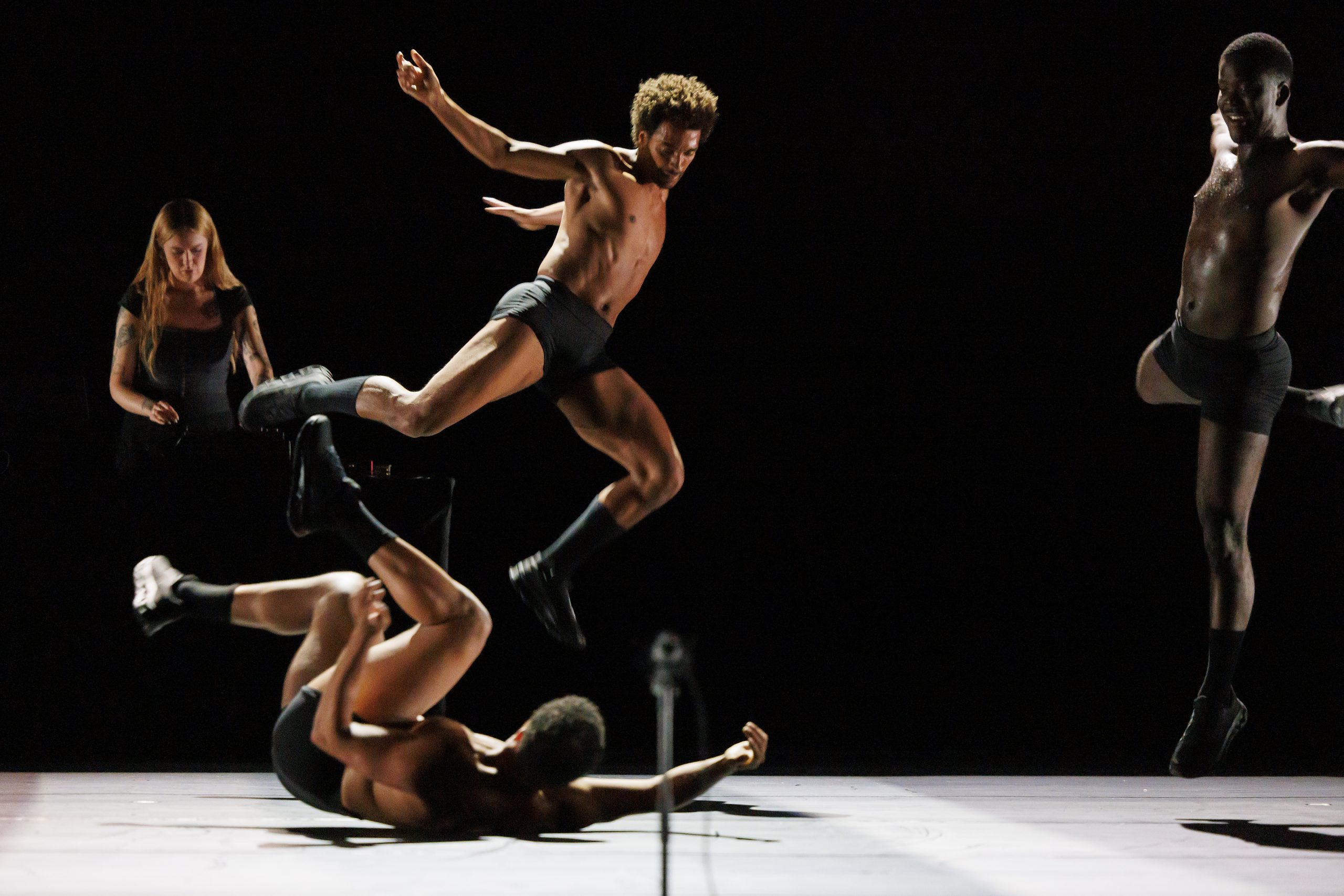
British choreographer Liam Francis’ A Body of Rumours was certainly imaginative in concept. Three dancers occupied a space in which movement and sound were intimately connected. A specially equipped floor captured the sounds of their feet, while microphones and beatboxing created layers of reverberation and rhythm.
The work was intended to challenge the notion that Black dancers must always be placed in competition with one another. Instead, Francis emphasized intimacy, belonging and the freedom to move together in a world governed by fairness and justice.
It was an admirable premise, and the integration of contemporary dance, hip-hop and live sound manipulation was undeniably clever.
Unfortunately, once the novelty of the sound technology became apparent, I found the choreography increasingly repetitive. The work went on too long, and despite the ingenuity of its theatrical devices, it failed to sustain my interest. The audience was clearly enthusiastic, so I may be in the minority, but for me it was the one disappointment across the two programs, albeit Francis is a current critical darling. (Needless to say, I’m certainly curious about Francis’ one man show Lyre Liar taking place on Oct. 24 and 25 at the Jane Mallett Theatre.)
The contrast between the evenings was also evident in their extraordinary curtain calls, both of which provided unexpected and joyous conclusions.
Just when the audience thought Legends was over, Martin had another surprise in store.
Onto the stage came a large contingent of dance students from Toronto Metropolitan University, dressed as glittering pom-pom girls. To the song “Everywhere” by Fleetwood Mac, they launched into an exuberant routine that gradually revealed its ingenious purpose.
As the students danced, they would suddenly open their formation to introduce one of the acts we had just seen. First came Hubbard Street Dance, and once the audience realized what was happening, anticipation mounted as we waited to see how each successive company or performer would be presented.
It was an absolute delight. Martin had choreographed not merely a curtain call but a complete theatrical event, culminating in all the performers dancing together with the students. The audience went crazy, and deservedly so.
Heartbeats offered an equally exhilarating finale, but one entirely in keeping with the character of street dance.
After their final bow, the dancers from Roses were joined by the performers from Echoes of the Same Tree and A Body of Rumours. As lively music filled the theatre, the combined group began showing off their individual styles.
One dancer would launch into a movement and others would pick it up. Two or three would come together, responding to one another’s rhythms and steps, sometimes playfully trying to outdo each other. What emerged was a joyous exchange of movement among artists representing four countries.
The audience simply did not want it to end. Here was street dance at its most communal, with performers celebrating both their individuality and their shared artistic language.
The two curtain calls could not have been more different. One was a brilliantly orchestrated piece of theatrical choreography, the other a seemingly spontaneous celebration of dance. Yet both brought their respective evenings to a rousing conclusion and created an exhilarating connection between performers and audience.
In the end, Legends and Heartbeats proved to be ideal opening programs for Fall for Dance North 2026. The first was an irresistible celebration of dance’s visual and theatrical pleasures, while the second brought a more serious exploration of identity, social realities and the expressive power of street dance traditions.
Together, they demonstrated the breadth of Sutherland and Binet’s ambitions, as well as the care with which the festival is now being programmed. These were not interchangeable evenings of assorted dance. Each had its own character, its own artistic logic and its own emotional trajectory.
If these first two programs are any indication, Fall for Dance North has entered an exciting new chapter.
(FFDN continues with Hear the Dance (Oct. 22 to 24), and Landslide and Liar Lyre, both Oct. 24 and 25.)